
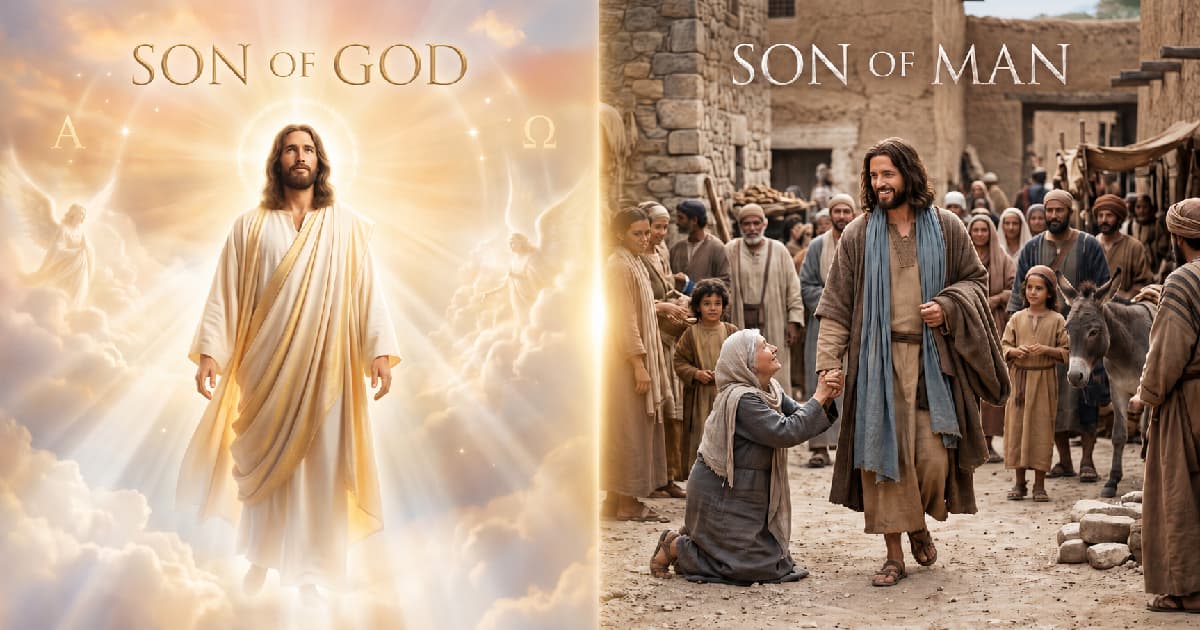
The Dual Nature of Jesus: Why He Is the Only Way to Salvation
Q: Why is Jesus called the "Son of God"?
A: He is unified in essence with the Father. He was not created but begotten, possessing the same DNA and nature as God, proven by His sinless life, His resurrection, and His divine authority.
Q: What does "Son of Man" mean?
A: The term has dual significance: first, it points to the Savior in Daniel's prophecy who receives power and glory; second, it indicates His true humanity (flesh and blood), intended to remove barriers and become a reachable Savior.
Q: Why must Jesus hold both the Son of God and Son of Man identities?
A: Only a "Man" can substitute for human sin to satisfy God’s justice; only "God" can defeat the power of the devil, break the sting of death, and resolve the ultimate judgment of sin.
Q: If Jesus is the Son of God, why was He arrested?
A: Arrest and crucifixion were part of His proactive redemptive plan. God did not overturn His own law but allowed His Son to be incarnated, suffering and dying to abolish the power of legal condemnation.
Q: How can we prove Mary was a virgin?
A: This was a supernatural revelation from God, who moved both Mary and Joseph. Joseph, knowing the shame and danger of an unwed pregnancy, chose to obey because he believed it was God's will—a testimony to the event's truth.
Q: What is the significance of Jesus' baptism and temptation?
A: Jesus was baptized to fulfill all righteousness, completing all ordinances and regulations established by God for humanity as the "Son of Man". Overcoming forty days of temptation without sin further proved His divine qualification as the Redeemer.
Q: Is the term "Son of Man" frequently used in the Bible?
A: Jesus referred to Himself as the "Son of Man" 88 times in the Gospels, emphasizing His identification with humanity and His firm commitment to the mission of salvation.
Q: Why is it said that only the Son of Man can solve the problem of sin?
A: The wages of sin is death, and God cannot simply overturn His own principles of justice. A "true man" must substitute for the sinner to restore the relationship with God while fulfilling the standards of divine justice.
Q: How does Jesus' divinity impact the lives of believers?
A: Believers receive a new spiritual DNA by accepting Him. By the authority of the Son of God, He sends the Holy Spirit, enabling believers to pray and declare in His name to gain power over sin and Satan.
Q: How should one respond to Jesus saying, "I am the way, the truth, and the life"?
A: This is a declaration that demands a life decision. If His words are true, He is the only way to the Father. One must decide to accept or reject Him, a decision that determines one’s eternal destiny and judgment.
文章內廣告
Google AdSense In-Article
Related Posts

The Bible—The Inspired Truth of God
Exploring the nature of the Bible as the inspired truth of God. From its unique structure and authority to the unfolding...

"Is There Really a God?" Faith FAQ
Regarding the question "Is there really a God?", the Bible and the Christian faith provide clear answers. We have compil...

One God vs. Many Gods—A Pursuit of Truth
Exploring the essence of faith, from analyzing the limitations of polytheism to recognizing the one true God—the superna...